
Corporate Governance
We protect our organization through regulatory bodies and with comprehensive solutions for whistleblowing, anti-money laundering, and ethical conduct. Everything you need in one place.
Three Pillars Of Integrity
Each element works together to strengthen our compliance framework.
Secure Whistleblowing Channels
Report concerns safely and confidentially through protected systems.
Anti-Money Laundering Controls
Detect and prevent financial crime with advanced monitoring.
Ethical Financial Code of Conduct
Clear standards guide your team toward responsible decisions.
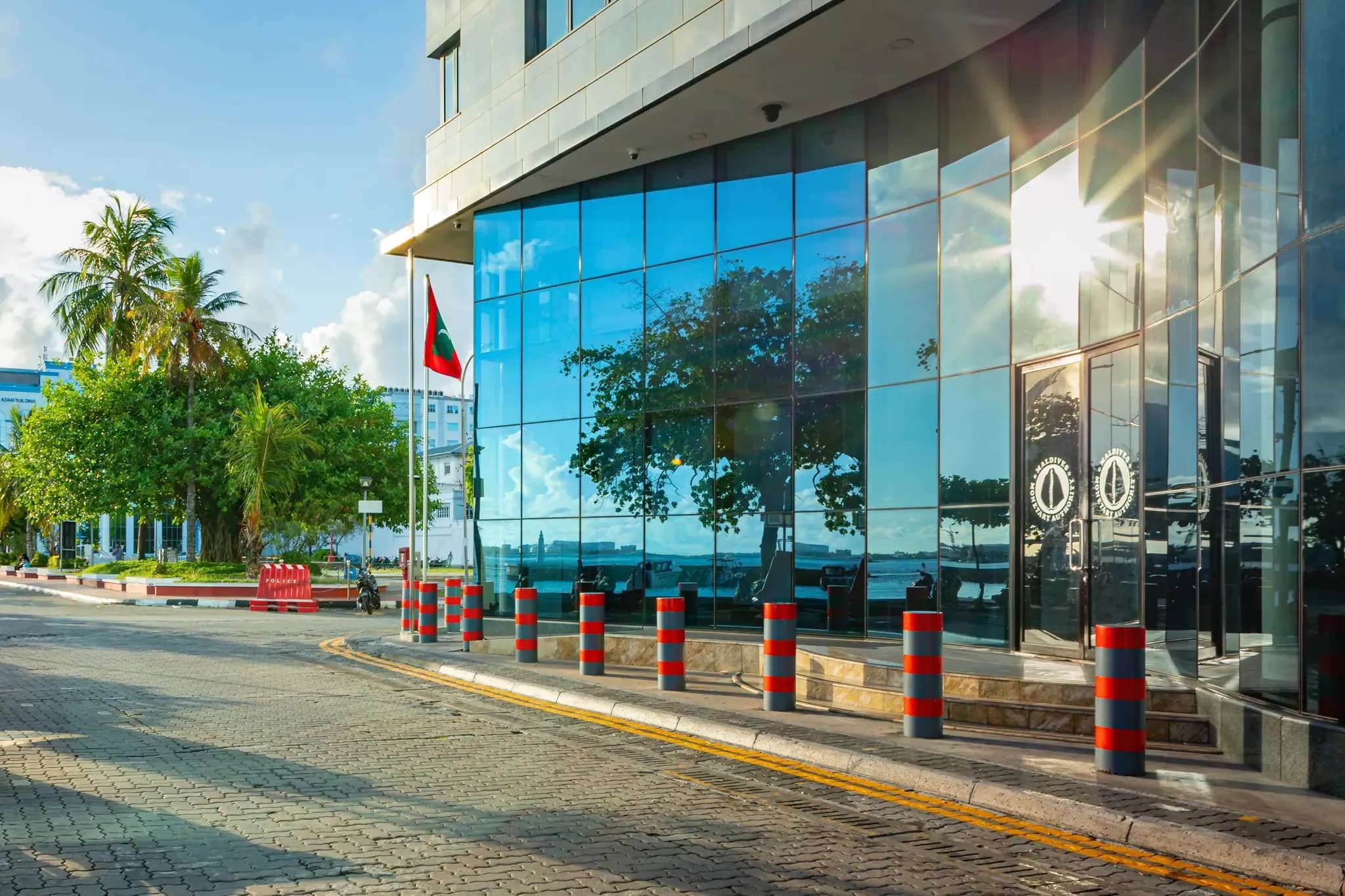
Regulated by Maldives Monetary Authority
HDFC complies with the legislation and regulations that govern the non- financial banking sector issued by the Authority.
CMDA Corporate Code
HDFC is bound by Capital Market Development Authority’s Corporate Code on Corporate Governance, the framework that recognizes the shareholders’ rights and ownership functions, the role of stakeholders, disclosure and transparency standards and critical duties and responsibilities of the Board.
Board Composition
The Board of Directors comprises of five nominees from the shareholders; the Government of Maldives, HDFC Investments Ltd., (India), the Asian Development Bank and the International Finance Corporation. Each of the shareholders are represented by one Nominee Director with the exception of the Government of Maldives which has two Nominee Directors in the Board. The shareholders also have the right to nominate Alternative Directors who may participate in the Board Meetings but can only exercise the right to vote in the absence of the Nominee representing the shareholder. The Chairman to the Board of Directors is appointed on rotation, and with a non-voting managing director responsible for policy implementation and on-going operations.
Board Meetings
The Board meets at least once every three months to discuss pending matters and performance of the Company. The Annual General Meeting of Shareholders requires a quorum comprising of shareholders holding a majority of shares of the Company. The financial statements of the previous year is approved and adopted at the Annual General Meeting.
Audit Committee
The Board meets at least once every three months to discuss pending matters and performance of the Company. The Annual General Meeting of Shareholders requires a quorum comprising of shareholders holding a majority of shares of the Company. The financial statements of the previous year is approved and adopted at the Annual General Meeting.
Shari’ah Committee
The HDFC Amna department is managed and systematized to ensure proper Shari’ah governance mechanisms both within the department and among its stakeholders. A Shari’ah Committee consisting of three members has been established to advise the Board of Directors of HDFC on Shari’ah related matters.
Safeguarding the Social and Operational Environment
At the end of each Financial Year, an annual monitoring report is delivered to ADB, consistent with the requirements of the Shareholders’ Agreement, confirming compliance the social and environmental covenants of the Agreement or, as the case may be, identifying any non-compliance or failure, and the actions being taken to remedy any such deficiency.
Anti-Money Laundering and Combating the Financing of Terrorism
The Company complies with internal procedures and controls satisfactory to the International Investors, and following national law and best international banking standards, including the standards promulgated by the Basel Committee on Banking
Supervision and the Wolfsberg Standards, for the purpose of:
- Preventing the Company from being used for Money Laundering, the Financing of Terrorism, fraud, or other corrupt or illegal purposes or practices
- Ensuring that any financial institution with which the Company conducts business
- Or enters into any transaction, or through which the Company transmits any funds, does not have correspondent banking relationships with any Shell Bank.
- Ensuring that the Company does not conduct business or enter into any transaction with or transmit any funds through a Shell Bank.
- Ensuring that the Company will not enter into any transaction with, or for the benefit of, any individuals or institutions named on lists of sanctioned persons promulgated by the United Nations Security Council or its committee’s resolutions in connection with money laundering or anti-terrorism matters.
FAQs
Common questions about compliance, ethics, and our approach to solving them.
Our systems use encrypted channels and third-party intermediaries to protect reporter identity. No one in your organization can trace a report back to its source unless the reporter chooses to identify themselves. The process is built on the principle that safety comes first.
We analyze transaction patterns, customer behavior, and risk indicators in real time. The system flags anomalies for your team to review, reducing manual work while catching what matters. You maintain control over every decision.
Absolutely. We work with your leadership to understand your culture, industry, and values. The final code reflects your organization's voice, not a generic template. It becomes something your people actually believe in.
Reports go to designated investigators who follow your established procedures. We provide tracking systems so reporters can see progress without compromising confidentiality. Accountability is built into every step.
We provide dashboards showing report trends, AML detection rates, and code of conduct acknowledgment. These metrics help you understand where your program is working and where it needs attention. Data drives better decisions.
We've designed everything to integrate smoothly with existing systems. Training is straightforward, and our team manages the technical setup. Most organizations see full adoption within weeks, not months.
